




Mammograms
According to the American Cancer Society, breast cancer is the most common type of cancer in Minnesota and the fourth leading cause of cancer deaths. Breast cancer is most common in women. Although it is rare, men can get breast cancer too. A mammogram is an X-ray of the breast used to look for breast cancer. A mammogram can detect breast cancer early, and early detection is your best protection! If a lump is found early, removal of the breast or chemotherapy may not be needed. Even more important, a mammogram can find cancer before it spreads, which may save your life!
The U.S. Preventive Services Task Force recommends that women ages 40 – 74 years at average risk for breast cancer get a mammogram every 2 years. Talk with your health care provider about what is right for you. Then be sure to follow your provider’s recommendations and schedule your mammograms as appropriate!
Learn more about mammograms
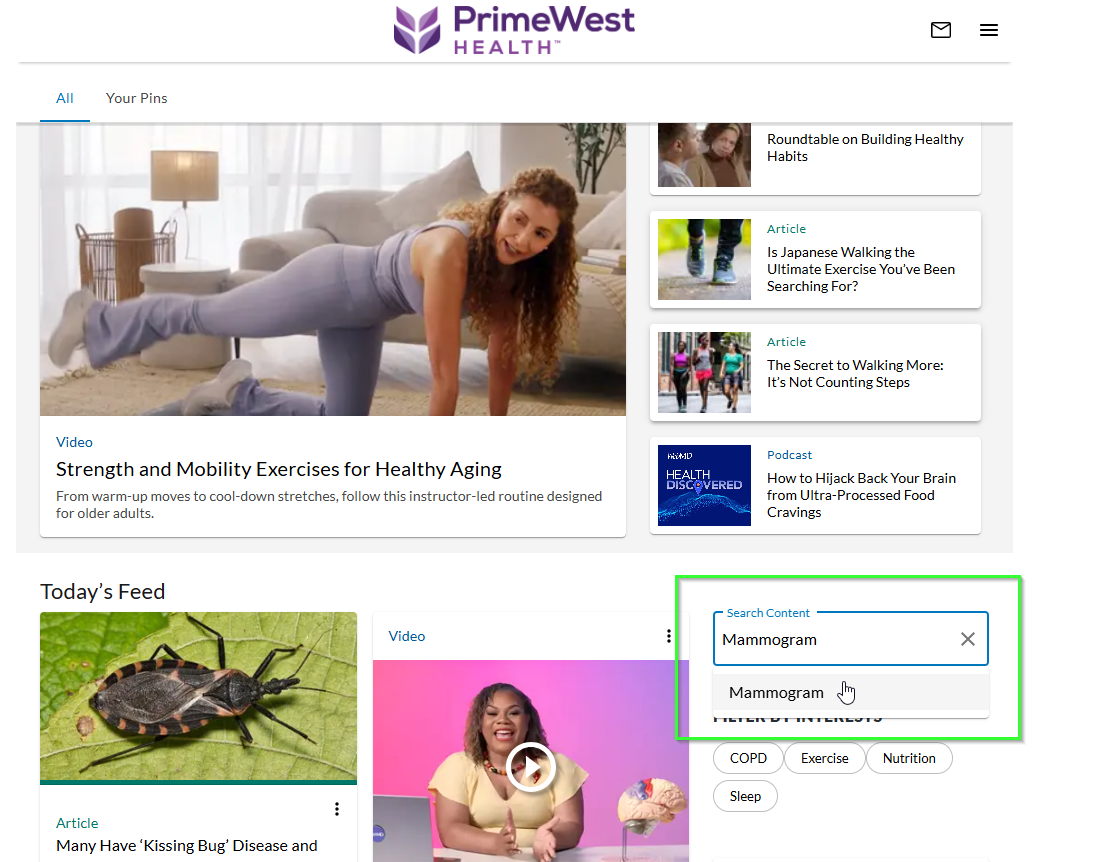
You can learn more about mammograms by logging on to the Secure Member Site. Click Access Wellness in the Quick Links menu. Then, click the icon with three horizontal lines in the upper right corner and click Content Hub in the dropdown menu. On the next screen, locate the “Search Content” box on the right side of the screen. Type “mammogram” in the search box and then click on the results that appear below the box. Please note, your screen may look different from the images below depending on the interests you have chosen, etc.
The Secure Member Site is a health information resource available at no cost to you.

Learn more about risk factors
The National Cancer Institute has an online Breast Cancer Risk Assessment Tool that can help determine your risk factors. Be sure to read about the tool’s limitations and always talk with your health care provider.
Understanding risk factors can help you understand your chances of getting breast cancer and steps you can take that may lower your risk. The following information about risk factors for breast cancer is from the Centers for Disease Control and Prevention (CDC)1:
Studies have shown that your risk for breast cancer is due to a combination of factors. The main factors that influence your risk include being a woman and getting older. Most breast cancers are found in women who are 50 years old or older.
Some women will get breast cancer even without any other risk factors that they know of. Having a risk factor does not mean you will get the disease, and not all risk factors have the same effect. Most women have some risk factors, but most women do not get breast cancer. Talk with your doctor about ways you can lower your risk and about screening for breast cancer.
Risk factors you cannot change
- Getting older. The risk for breast cancer increases with age; most breast cancers are diagnosed after age 50.
- Genetic mutations. Inherited changes (mutations) to certain genes, such as BRCA1 and BRCA2, increase the risk of breast and ovarian cancer.
- Reproductive history. Starting menstrual periods before age 12 and starting menopause after age 55 expose women to hormones longer, raising their risk of getting breast cancer.
- Having dense breasts. Dense breasts can sometimes make it hard to see tumors on a mammogram. Women with dense breasts are more likely to get breast cancer.
- Personal history of breast cancer or certain non-cancerous breast diseases. Women who have had breast cancer are more likely to get breast cancer a second time. Some non-cancerous breast diseases such as atypical hyperplasia or lobular carcinoma in situ are associated with a higher risk of getting breast cancer.
- Family history of breast cancer. Having a family history of breast cancer may increase risk for breast cancer. For example, risk may be higher is a person’s mother, sister, or daughter (first-degree relative) or several family members on either parent’s side of the family have had breast cancer, or if a relative had breast cancer at a young age. A family history of ovarian cancer or breast cancer in a male relative also raises risk.
- Previous treatment using radiation therapy. Women who had radiation therapy to the chest or breasts (for instance, treatment of Hodgkin’s lymphoma) before age 30 have a higher risk of getting breast cancer later in life.
- Exposure to the drug diethylstilbestrol (DES). DES was given to some pregnant women in the United States between 1940 and 1971 to prevent miscarriage. Women who took DES have a higher risk of getting breast cancer. Women whose mothers took DES while pregnant with them also may have a higher risk of getting breast cancer.
Risk factors you can change
- Not being physically active. Women who are not physically active have a higher risk of getting breast cancer.
- Being overweight or having obesity after menopause. Older women who are overweight or have obesity have a higher risk of getting breast cancer than those at a healthy weight.
- Taking hormones. Some forms of hormone replacement therapy (those that include both estrogen and progesterone) taken during menopause can raise risk for breast cancer when taken for more than 5 years. Certain oral contraceptives (birth control pills) also have been found to raise breast cancer risk.
- Reproductive history. Having the first pregnancy after age 30, not breastfeeding, and never having a full-term pregnancy can raise breast cancer risk.
- Drinking alcohol. Studies show that a woman’s risk for breast cancer increases with the more alcohol she drinks.
Research suggests that other factors such as smoking, being exposed to chemicals that can cause cancer, and changes in other hormones due to night shift working also may increase breast cancer risk.
1CDC, “Breast Cancer Risk Factors,” September 22, 2025.
PW_07-17_268
DHS_Accepted_10/27/2025
Updated_10/28/2025